

Fluid End Modules Accessories
Best-all Petroleum Machinery Co., Ltd.
Since 2010, Best-all Petroleum Machinery Co., Ltd. has been supplying high quality products to the oil well drilling industry. Our core focus is to provide performance enhancing mud pump parts and solutions that meet the oil well drilling standards. We have developed, tested and enhanced mud pump components that decrease downtime, improve safety and perform in the toughest drilling environments.
Why Choose US
Our Factory
Since 2010, Best-all Petroleum Machinery Co., Ltd. has been supplying high quality products to the oil well drilling industry. Our core focus is to provide performance enhancing mud pump parts and solutions that meet the oil well drilling standards. We have developed, tested and enhanced mud pump components that decrease downtime, improve safety and perform in the toughest drilling environments.
Our Product
Fluid end expendables: liners, pistons, valves & seats, extension rod, piston rod, clamps
Fluid end modules & accessories
Refurbishment & overhaul parts
Power end components
Pulsation dampener & Discharge Strainer
Discharge & Suction Manifold
Production Equipment
Best-all Petroleum Machinery Co., Ltd. Funishes all facilities including casting, forging, heat-treating, milling and CNC lather.
Production Market
United States, Canada, Mexico, Colombia, Brazil, Middle East, India, Germany, Netherlands, Great Britain, Poland, Russia.
-
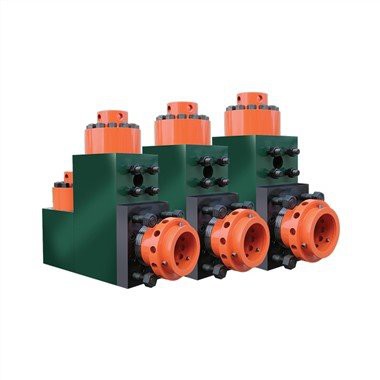 Fluid End Complete ModulesBest-all offers fluid-end modules for the most well-known makes and models of mud pumps in serviceAdd to Inquiry
 -
 Module AccessoriesBest-all offers a full range of fluid end module accessories including threaded rings, threadedAdd to Inquiry
 -
 Module Stud and NutBest-all offers a full range of module stud and nut for mud pump fluid end, both valve-over-valveAdd to Inquiry
 -
 Fast-change Fluid End ComponentsBest-all offers fast fluid end module accessories including Valve cover system, liner retentionAdd to Inquiry
 -
 7,500 PSi Fluid End Complete UpgradeBest-all has the experience, technical know-how and right products to guide you through the SWFEAdd to Inquiry


- Tel: +86-533-8171332
- Fax: +86-533-8171332
- Sales01@bp-mudpump.com
- Add: Room 702, Block B, 105 Liuquan Road, Hi-tech Zone, Zibo, China
What is Fluid End Modules Accessories
Fluid end modules are workhorses of mud pump systems, but extreme working environments make them especially vulnerable to stress, wear and damage. In choosing durable fluid end parts that resist cracking and corrosion, you're making a wise long-term investment for your operations.

Easy maintenance for reduced downtimes;
The replacement of monoblock assemblies with modular fluid ends doesn't require any additional tools or trainings;
Minimized flexing stress amplitude for improved pressure cycles;
Reduced spare parts costs;
Stamping results in cost reduction compared to free forging since there is 30% material less;
Specific material flow for improved fatigue resistance;
Weight reduction;
Minimized machining and utilization of smaller machining machines and thus reducing the cost of machining;
Possibility of using steel instead of stainless steel for similar performance levels.
Fluid End modules are subject to high pressure, abrasion, corrosion, and fatigue, which can cause damage and reduce their performance and lifespan. It is important to repair and refurbish fluid end modules regularly to ensure optimal efficiency and safety.
Will inspect, clean, replace, and restore the parts that are worn out or damaged on modules. Our standard process includes:
Identifying the make and model of the fluid end module.
Different types of modules require different repair and refurbishment methods and techniques. This first step is critical to determine the best procedure for your module repair.
Removing the damaged parts, cleaning, and sandblasting for module evaluation.
Evaluating the condition of the fluid end modules and identifying any internal damage, such as cracks/indications, washouts, thread damage, or internal surface damage.
Restoring the fluid end modules to their original shape and size by using proprietary welding and machining processes, depending on the extent and type of damage.
Repairing and refurbishing fluid end modules will extend their service life, reduce your overall capital expenditure, and improve the performance and reliability of the mud pumps. FET is equipped to repair all types fluid end modules, including one-piece, two-piece, L-shaped, or valve-over-valve.

What Causes the Fluid End Premature Failure
There are several significant problems that can lead to the premature failure of the fluid end. Most of the following issues can be easily avoided during the design phase and through a different material choice.
Fatigue cracking
Fatigue cracking depends on the endurance limit of the metals used for the manufacture of the fluid end. Also, some solutions have intersecting bores that begin to exceed their endurance limits when exposed to the pump pressure. Excessive cavitation and impact from foreign objects can create as well separations or cracks in the fluid end material.
Corrosion
The easily corroding carbon steel is contributing to cracks and damages. Also, the metal and iron contaminants found in well stimulation fluids can deteriorate the fluid end metal. Superior stainless steel is definitely the better material choice extending the pumping hours of the fluid end nearly 10 times with the proper maintenance.
Cavitation
Rapid changes in pressure lead to the forming and imploding of cavities in the liquid. An elaborated design can significantly reduce the appearance of this problem.
Washing out
This issue is related to the fact that the valve seat is almost twice as hard as the surface of the fluid end. Valve seats are pulled out and changed in the field. There is often dirt and sand that can get trapped between the valve seat and the fluid end taper, leaving some damages that prevent the valve seat from sealing properly and leading to the washing out of the fluid end in this area.
Mud Pump Expandables
Fluid end modules
Complete range of interchangeable fluid end modules and accessories for triplex mud pumps. Fluid ends and components are interchangeable to oem’s such as south west national, emsco, gardner denver, bomco, ideco and oilwell. In both standard oem style replacement parts and two piece “l” shaped fluid ends. Manufactured to the highest quality, best performance and durability. 5000psi & 7500psi available.
Zirconia liners
We offers both zirconia and high-chrome liners for the drilling industry. Our proprietary zirconia liners have proven to lower liner costs by up to 75% over traditional chrome liners. Piston life is also greatly extended due to the smoother surfaces zirconia provides.
Bi-metal liners
We offers low cost bimetal liners produced under strictly control the tolerance, & made according to api and related international standard assure the easy installation, inner sleeve is highly polished with abrasion & corrosive resistance, can used in various rough working environment with longer service life.
Pistons
We offers various pistons excellent abrasion resistance and capable of operating at 7500psi, and have a full range of urethane pistons for both regular and high temp applications. We also offer bonded rubber and replaceable rubber pistons for general service conditions for major mud pump brand in various origins & brands
Valves & seats
We offers complete range of full open, 3 web, 4 web and plate type design valves and seats made of forged alloy steel with deep carburized wear surface in 4” thru 8” sizes to fit all major mud pumps and accommodate for all types of drilling applications, mud properties and temperatures reaching up to 350°f.
Piston rods
Piston rods we offers are manufactured to exacting standards to meet today’s tough oilfield requirements available for a wide range of triplex mud pumps . Manufactured form high quality alloy steel surface is induction hardened for maximum case hardness and core strength-hard on the outside tough on the inside precision ground mirror surfaces meet rigid quality control standards and minimize wear.
Evaluate the type of operation
Your operation type-whether onshore or offshore-significantly impacts the kind of mud pump you'll need. Offshore rigs typically require more robust, high-pressure pumps compared to onshore operations. Understand the specifics of your operation to determine the right pump category.
Consider pump size and power
Mud pump size and power are critical. This is usually measured in horsepower (hp). A larger, more powerful pump is ideal for deeper wells and harder rock formations. However, consider operational efficiency; an overly large pump can be as detrimental as a small one.
Assess the fluid end materials
The fluid end of the pump undergoes extreme pressures and corrosive substances. Look for pumps with fluid ends made from durable materials like stainless steel or specialized alloys to ensure longevity and reliability.
Check the pressure rating
The pressure rating of the pump must align with your drilling needs. Higher pressure ratings are essential for deeper wells, as they need to pump mud over greater distances and through tighter spaces.
Evaluate the pump design
The design of the mud pump affects its maintenance and efficiency. Triplex pumps are more efficient and have smoother flow compared to duplex pumps. However, duplex pumps are simpler and cheaper to maintain. Choose based on your operational needs and maintenance capabilities.
Consider manufacturer and support
The reputation and reliability of the manufacturer are crucial. Choose a manufacturer with a proven track record in the oil and gas industry. Additionally, consider their support and parts availability. Prompt technical support can minimize downtime in case of pump failures.
Factor in the total cost of ownership
Finally, look beyond the initial purchase price. Consider the total cost of ownership, which includes maintenance, spare parts, and operational efficiency. A cheaper pump can often turn out to be more expensive in the long run if it requires frequent repairs or consumes more power.
Internal Components of Mud Pumps
A mud pump's internals can be divided into two main sections: The power end and the fluid end, each comprising several critical components.
Power end
Base and frame: The base and frame provide structural support for the mud pump, ensuring its stability during operation.
Gear shaft assemblies: These include small gear shafts and large gear shaft assemblies, which transmit power to drive the pump head.
Crankshaft assembly: The crankshaft is a vital component that facilitates the reciprocating motion necessary for suction and discharge of the mud.
Crosshead assembly: The crosshead is connected to the crankshaft, transmitting power to the fluid end.
Dc motor: A direct current motor supplies power to the mud pump, enabling efficient operation.
Fluid end
Fluid cylinder: The fluid cylinder forms part of the pump head and serves as the housing for various other fluid-end components.
Valves: The fluid end includes suction and discharge valves that regulate the flow of mud.
Liner, pistons, and piston rods: These components work together to draw in and discharge mud from the fluid cylinder.
Suction and discharge piping: These pipelines connect the fluid end to the mud tank and other sections, ensuring the flow of mud.
Safety valve: The safety valve functions to protect the pump body by rapidly relieving pressure when it exceeds the set limit.
FAQ
We're professional fluid end modules accessories manufacturers and suppliers in China, specialized in providing high quality products and service. We warmly welcome you to buy high-grade fluid end modules accessories at competitive price from our factory.
Fast change Fluid End Components, 7 500 PSi Fluid End Complete Upgrade, Fluid End Modules Accessories